



If you’re an ebike rider in the US, you know that your electric bike is more than just a regular bicycle with a motor—it’s a powerful, heavy, and versatile machine that demands specialized components to perform at its best, and the most critical of these components is undoubtedly the tires. The term ebike friendly tire has become a cornerstone in the ebike industry, and for good reason: regular bike tires simply can’t stand up to the unique stresses that electric bikes place on their rubber, from increased weight and torque to higher speeds and more frequent heavy braking. Whether you’re commuting to work on city pavements, exploring off-road trails on the weekends, or tackling snow and sand with a fat tire ebike, choosing the right ebike friendly tire is non-negotiable for safety, performance, and longevity.

Our E-bike Friendly Tires Guide will break down the essential features that define a true ebike friendly tire, explain the key differences between these tires and standard bicycle tires, walk you through the step-by-step process of selecting the perfect ebike friendly tire for your riding style, highlight some of the most highly regarded ebike friendly tires on the US market today, and dive deep into the top ebike friendly fat tires from Hycline—one of the fastest-growing brands in the fat tire ebike space — with detailed insights into their intended uses and why they stand out for American riders. By the end of this guide, you’ll have all the professional knowledge you need to make an informed decision and upgrade your ebike with tires that are built to handle everything your electric bike can throw at them.
Let’s define what an ebike friendly tire actually is, and why it’s not just a marketing buzzword but a necessity for any ebike owner. An ebike friendly tire is engineered specifically to address the three core physical stresses that electric bikes impose on tires, which standard bike tires are not designed to withstand: increased overall weight, higher torque and speed, and amplified braking forces. Modern electric bikes—especially fat tire ebikes, which are wildly popular in the US for their all-terrain capabilities—typically weigh between 50 and 70 pounds (22 to 32 kg), thanks to their robust frames, heavy batteries, and powerful motors, while a traditional non-electric road bike might weigh just 20 to 30 pounds. This extra weight creates constant, intense compression on the tire, increasing friction between the rubber and the road, and putting immense strain on the tire’s internal casing and sidewalls. On top of weight, ebikes deliver instant torque from their motors—even entry-level models offer 40 to 80 Nm of torque—and can reach sustained speeds of 20 to 28 mph (Class 1, 2, and 3 ebikes), which places a severe shearing force on the tire’s tread, threatening to tear the tread away from the casing with every acceleration. Finally, the heavier weight and higher speeds of ebikes mean that braking forces are far more intense than on regular bikes; stopping a fast-moving, heavy ebike generates significant heat and pressure, and the tire must maintain its grip and structural integrity through repeated hard stops. An ebike friendly tire is built from the ground up to counteract all of these stresses, with reinforced materials, specialized tread patterns, and structural design choices that standard bike tires lack. This engineering isn’t just about performance—it’s about safety: a blown tire or a tread separation on an ebike traveling at 25 mph can lead to a serious accident, making the investment in a true ebike friendly tire one of the most important you can make for your ride.Now, let’s break down the essential features of a high-quality ebike friendly tire, the characteristics that separate a genuine ebike optimized tire from a regular tire with a fancy label. To make these features more tangible and easy to reference, here’s a detailed table outlining the key components of an ebike friendly tire, their purpose, and typical specifications you’ll find in top-tier models available in the US market:
| Key Feature of Ebike Friendly Tire | Purpose & Benefit for Ebike Riders | Typical Specifications (US Market) | Why It Matters vs. Regular Bike Tires |
| Reinforced Tire Casing | Resists compression, tears, and structural damage from ebike weight and torque; ensures long-term durability | 30–60 TPI (thread count); ECE R75/E-50 e-bike certification; motorcycle-grade rubber compound | Regular tires have 15–25 TPI casings and no e-bike certification, leading to rapid breakdown under ebike stress |
| Puncture Resistance | Blocks road debris (nails, glass, thorns) and off-road hazards (rocks, branches) to reduce flats | Kevlar or high-density rubber puncture layer; thickened sidewalls (2–3mm); reinforced tread blocks | Regular tires have thin sidewalls (1–1.5mm) and no dedicated puncture layer, leading to frequent flats on ebikes |
| Load Capacity | Supports the heavy weight of ebikes (50–70 lbs) + rider + cargo without bottoming out or damage | 198–220 lbs (90–100 kg) per tire; optimized for low-pressure inflation (5–30 psi) | Regular tires have load capacities of 150–180 lbs, leading to sidewall bulges and tire failure on ebikes |
| Tread Pattern Design | Maximizes traction, minimizes rolling resistance, and adapts to specific terrains (pavement, off-road, snow) | Semi-slick (pavement): 1–2mm tread depth; All-terrain: 3–5mm tread depth; Snow/off-road: 5–8mm tread depth | Regular treads lack optimization for ebike torque, leading to poor grip, high rolling resistance, or rapid wear |
| Rolling Resistance | Reduces friction to extend ebike battery range and reduce motor strain | Rolling resistance coefficient (Crr) of 0.005–0.008 (pavement); 0.008–0.012 (all-terrain) | Regular tires have Crr of 0.010–0.015, draining ebike battery 10–15% faster |
| Durability & Wear Resistance | Withstands frequent use, high speeds, and heavy braking without premature wear | 3,000–5,000 miles lifespan; abrasion-resistant rubber compound | Regular tires last only 500–1,000 miles on ebikes, requiring frequent replacement |

The first and most fundamental feature from the table above is a reinforced tire casing, typically marked with an e-bike rating (such as ECE R75 or E-50) that certifies it for the extra load and torque of electric bikes. E-bike friendly tire casings use a higher thread count (TPI) or thicker, more durable rubber compounds—often motorcycle-grade rubber—to resist punctures, tears, and compression damage; for fat tires, a 30 TPI casing is a common standard for balancing durability and flexibility, as it can handle the low pressure required for off-road riding while still supporting the ebike’s weight. Closely tied to the casing is puncture resistance, a must-have for ebike riders who don’t want to deal with flats on their commutes or adventures. Top ebike friendly tires feature thickened sidewalls, embedded puncture protection layers (such as Kevlar or high-density rubber), and reinforced tread blocks that block nails, glass, thorns, and road debris—critical for urban riders who navigate littered city streets and off-road riders who encounter sharp rocks and branches.
For fat tire ebikes, which are often used on soft or uneven terrain, load capacity is another non-negotiable feature: a quality ebike friendly fat tire will have a maximum load rating of at least 198 lbs (98 kg) per tire, enough to support the rider, the ebike’s weight, and even additional cargo for commuting or touring.
Tread pattern design is also tailored to ebike performance, with two primary approaches depending on the intended terrain: for paved and hardpack surfaces, ebike friendly tires feature semi-slick or low-profile treads with minimal drag to maximize energy efficiency (a key concern for ebike riders looking to extend battery range) and low noise, while for off-road, snow, sand, or mud, they have aggressive, deep treads with large knobs or convex buttons that deliver unbeatable traction and floatation. Many all-terrain ebike friendly fat tires strike a balance between these two, with a central smooth strip for pavement efficiency and raised side knobs for off-road grip during cornering.
Rolling resistance is another key feature, especially for ebike riders who prioritize battery life: ebike friendly tires are engineered with rubber compounds that reduce friction between the tire and the surface, which can boost battery range by 10 to 15%—a difference that translates to more miles per charge, a huge benefit for daily commuters. For fat tire ebikes,low pressure compatibility is essential: ebike friendly fat tires can be inflated to as low as 5 to 15 psi for snow, sand, and mud, which spreads the tire’s contact patch and prevents sinking, while still being able to handle higher pressures (20 to 30 psi) for paved roads, making them versatile for all-terrain use.
Finally, durability and wear resistance are paramount, as ebike riders put more miles on their tires and subject them to more stress; top ebike friendly tires are rated for 3,000 to 5,000 miles of ride time, compared to just 500 to 1,000 miles for standard bike tires, meaning they last 4 to 5 times longer and offer better value over time despite a slightly higher upfront cost. All of these features work together to create a tire that doesn’t just fit an ebike, but enhances its performance, safety, and usability—something no regular bike tire can do.To truly understand the value of an ebike friendly tire, it’s critical to compare it directly to a regular bike tire and recognize the stark differences in design, construction, and performance that make regular tires unsuitable for electric bikes. Building on the earlier table, here’s a side-by-side comparison that highlights the key gaps between ebike friendly tires and regular bike tires, using real-world specifications that US riders will encounter when shopping for tires:

| Performance Category | Ebike Friendly Tire (US Market Average) | Regular Bike Tire (US Market Average) | Impact on Ebike Riders |
| Weight Capacity | 198–220 lbs (90–100 kg) per tire | 150–180 lbs (68–82 kg) per tire | Regular tires fail to support ebike weight, leading to sidewall bulges and blowouts |
| TPI (Casing Thickness) | 30–60 TPI | 15–25 TPI | Regular casings break down quickly under ebike torque, causing tread separation |
| Puncture Protection | Kevlar layer + 2–3mm sidewalls | No dedicated layer + 1–1.5mm sidewalls | Regular tires get 2–3x more flats on ebikes, leading to downtime and safety risks |
| Torque Resistance | Reinforced tread-to-casing bonding; motorcycle-grade rubber | Weak bonding; soft rubber compound | Regular tire tread wears out 4–5x faster on ebikes, requiring frequent replacement |
| Rolling Resistance (Crr) | 0.005–0.012 | 0.010–0.015 | Regular tires reduce ebike battery range by 10–15%, limiting ride distance |
| Lifespan (Miles) | 3,000–5,000 | 500–1,000 (on ebikes) | Regular tires cost more long-term, as they need replacement 4–5x more often |
| Low Pressure Compatibility | 5–30 psi (fat tires) | 15–40 psi (fat tires) | Regular fat tires can’t run low pressure for snow/sand, losing all-terrain capability |
The most obvious difference from the table is in weight capacity and load distribution: regular bike tires are built for the lightweight of a non-electric bike (20 to 30 lbs) and a single rider, with thin casings and low load ratings that can’t support the 50 to 70 lb weight of an ebike, let alone additional cargo. When a regular tire is used on an ebike, the constant compression causes the casing to break down quickly, leading to sidewall bulges, tread separation, and frequent flats. Torque and speed resistance is another massive gap: regular bike tires have soft tread compounds and weak tread-to-casing bonding that can’t handle the instant torque of an ebike motor, which causes the tread to slip and wear down at an accelerated rate—on a regular tire, the tread can wear out in just a few hundred miles of ebike use, compared to thousands of miles on an ebike friendly tire. Regular tires also lack the heat resistance needed for ebike speeds; as an ebike travels at 20+ mph, friction generates significant heat in the tire, and regular rubber compounds soften and degrade under this heat, increasing the risk of blowouts. Puncture protection is minimal in regular bike tires, which have thin sidewalls and no dedicated puncture layers—fine for casual non-electric riding, but a disaster for ebike riders who face more frequent contact with road debris and off-road hazards, as the extra weight of the ebike makes flats even more likely and more dangerous.Tread pattern design in regular tires is also not optimized for ebike performance: regular off-road tires have overly aggressive treads that create high rolling resistance on pavement, draining the ebike’s battery, while regular road tires have slick treads that lack the grip needed for the heavy braking and cornering of an ebike, increasing the risk of skidding. For fat tire ebikes, the differences are even more pronounced: regular fat tires are built for human power alone, with low-quality rubber and weak casings that can’t handle the torque of an ebike motor, and they lack the load capacity to support the ebike’s weight at low pressures, leading to bottoming out and tire damage on soft terrain. Even the valve stems and inner tubes that come with regular tires are unsuitable for ebike friendly fat tires, as they’re too thin to handle the low pressure and high load of an ebike, leading to slow leaks and blowouts. In short, using a regular bike tire on an electric bike is a false economy: while regular tires are cheaper upfront, they wear out quickly, require frequent replacement, and pose a serious safety risk, while an ebike friendly tire is a long-term investment that saves money, reduces downtime, and keeps you safe on every ride.Now that you understand what an ebike friendly tire is, its essential features, and how it differs from a regular bike tire, let’s walk through the professional process of selecting the right ebike friendly tire for your specific needs—whether you’re a city commuter, an off-road enthusiast, a snow and sand rider, or a casual all-terrain ebike user in the US. The first step in selecting an ebike friendly tire is to assess your primary riding terrain, as this will dictate the tread pattern, tire width, and rubber compound you need. To help you match terrain to tire specifications, here’s a quick reference table that outlines the ideal ebike friendly tire parameters for common US riding scenarios:
| Primary Riding Terrain (US) | Ideal Tread Pattern | Tire Width (Fat Tires) | PSI Range | Key Features to Prioritize |
| Urban Pavement/Bike Lanes | Semi-slick/low-profile | 4.0 inches | 20–30 psi | Low rolling resistance, puncture resistance, low noise |
| All-Terrain (Pavement + Gravel/Dirt) | Balanced (central smooth + side knobs) | 4.0–4.8 inches | 15–25 psi | Versatility, traction, moderate rolling resistance |
| Off-Road (Rocky/Muddy Trails) | Aggressive deep knobs | 4.0–4.8 inches | 10–20 psi | Traction, puncture resistance, durability |
| Snow/Sand | Aggressive/studied | 4.0–6.25 inches | 5–15 psi | Floatation, traction, low pressure compatibility |
| Long-Distance Commuting/Touring | Semi-slick/all-terrain | 4.0 inches | 18–28 psi | Low rolling resistance, durability, load capacity |
If you ride almost exclusively on paved city streets, bike lanes, and smooth hardpack, you’ll want an ebike friendly tire with asemi-slick or low-profile tread—these treads have a smooth central strip for minimal rolling resistance and low noise, with small side knobs for added grip during cornering, and they’re engineered to maximize battery range and durability on pavement. For riders who split their time between pavement and light off-road (gravel, dirt trails, mild mud), an all-terrain tread pattern is the perfect choice: these tires balance a smooth central strip for pavement efficiency with raised, spaced-out knobs for off-road traction, making them versatile for mixed-use riding. If you’re an off-road enthusiast who tackles rocky trails, deep mud, or steep hills, you’ll need an ebike friendly tire with an aggressive, deep tread pattern with large, sturdy knobs or convex buttons that dig into soft terrain and provide maximum grip on uneven surfaces—look for treads that channel mud and debris to prevent clogging, which is critical for maintaining traction in wet conditions. For US riders who live in northern states or mountainous areas and ride in snow, sand, or soft soil, a fat tire with a wide profile (4.0 inches or more) is a must, as these tires can be run at extremely low pressures (5 to 15 psi) to create a large contact patch and float on soft surfaces without sinking; for snow and ice, look for fat tires with studded treads or extra-aggressive knobs for added traction.The second step is to check your ebike’s specifications and fitment, a critical step that many riders overlook. First, confirm the tire size that your ebike’s rims and frame can accommodate—for fat tire ebikes, the most common sizes in the US are 20×4.0 and 26×4.0, which fit most fat tire ebike models, but it’s always best to check the sidewall of your current tire or your ebike’s owner’s manual for the exact size (expressed as diameter × width). Next, check the ebike’s weight and load capacity: if you have a heavy cargo ebike or you frequently carry gear, you’ll need an ebike friendly tire with a higher maximum load rating (200 lbs or more per tire) to support the extra weight. You should also check for frame and fender clearance: a wider fat tire may not fit if your ebike has narrow frame forks or fenders, so measure the space between the forks and the chainstays to ensure the tire has at least 6 mm of side clearance and 10 mm of vertical clearance when fully inflated. The third step is to prioritize your key performance goals, as this will help you narrow down your options. If battery range is your top priority, focus on ebike friendly tires with low rolling resistance and semi-slick treads—these tires reduce the energy the ebike’s motor needs to expend, extending your miles per charge. If safety and puncture resistance are your main concerns (especially for urban commuters), look for tires with reinforced sidewalls, embedded puncture protection layers, and motorcycle-grade rubber compounds that block road debris and prevent flats. If durability is key (for riders who put thousands of miles on their ebikes each year), choose an ebike friendly tire with a high e-bike rating (ECE R75/E-50) and a thick, reinforced casing that can handle constant stress and wear. For all-terrain riders, versatility is key—look for tires that can handle both low and high pressures, with a balanced tread pattern that performs well on both pavement and off-road. The fourth step is to consider the tire’s construction and features, such as folding vs. non-folding beads, tubeless compatibility, and warranty. Folding beads (usually made of Kevlar) make the tire lighter and easier to transport, which is great for riders who carry a spare tire, while non-folding steel beads are heavier but more durable, making them a good choice for heavy-duty off-road and cargo riding. Tubeless ebike friendly tires are a great upgrade for many riders, as they eliminate inner tubes and reduce the risk of pinch flats, especially at low pressures—they also allow you to run lower pressures for better traction without the risk of flats. Finally, check the warranty and brand reputation: stick with well-known brands that stand behind their products with a manufacturer’s warranty (such as 30-day returns or a mileage guarantee), and look for tires with positive reviews from other US ebike riders, especially riders with similar riding styles and ebike models. The fifth and final step is to set a realistic budget—while ebike friendly tires are more expensive than regular tires (typically ranging from $40 to $100 per tire for fat tires), they offer far better value over time due to their longer lifespan and lower maintenance costs. Avoid the cheapest “ebike friendly” tires on the market, as many are just regular tires with a label and lack the genuine engineering needed for ebike performance; instead, invest in a mid-range to high-end ebike friendly tire from a reputable brand—this is one component where cutting corners is not worth the risk to your safety and your ebike’s performance. By following these steps, you’ll be able to select an ebike friendly tire that is perfectly matched to your ebike, your riding style, and your terrain, ensuring the best possible performance, safety, and longevity.Now that you know how to select an ebike friendly tire, let’s highlight some of the most highly regarded ebike friendly tires on the US market in 2026, chosen for their exceptional performance, durability, and positive reviews from American riders—these tires cover a range of terrains and price points, making them suitable for all types of ebike owners. To make this comparison more actionable, here’s a detailed table of top-rated ebike friendly tires in the US, including their key specifications, price, and ideal use cases:
| Tire Brand & Model | Size (Fat Tire Options) | Key Specifications | Price (US Dollars) | Ideal Riding Terrain | US Rider Rating (Out of 5) |
| Schwalbe Super Moto-X E-Bike | 20×4.0, 26×4.0 | ECE R75 rated; 30 TPI; Green Guard puncture protection; semi-slick tread; 0.006 Crr | $79.99–$89.99 | Urban pavement, hardpack | 4.7 |
| 45NRTH Dillinger 5 | 26×4.8, 27.5×4.5 | ECE R75 rated; 30 TPI; studdable; aggressive snow/off-road tread; 198 lbs load capacity | $99.99–$109.99 | Snow, mixed terrain, off-road | 4.8 |
| HEB Allscape 20x4.0 E-Bike Fat Tire | 20×4.0, 26×4.0 | E-bike rated; 30 TPI; herringbone all-terrain tread; 2x thicker sidewalls; 3,000–5,000 mile lifespan | $49.99–$59.99 | All-terrain, commuting | 4.5 |
| Surly Dirt Wizard Studded Fat Tire | 26×4.6, 27.5×4.5 | ECE R75 rated; 30 TPI; aggressive off-road tread; studdable; reinforced casing | $89.99–$99.99 | Rocky/muddy off-road, snow/ice | 4.6 |
| Schwalbe Big Apple E-Bike Fat Tire | 20×4.0, 26×4.0 | ECE R75 rated; 30 TPI; slick tread; low rolling resistance (0.005 Crr); puncture protection | $74.99–$84.99 | Pavement, long-distance commuting | 4.7 |
For urban commuters and pavement riders, the Schwalbe Super Moto-X E-Bike is a top choice: this tire features a semi-slick tread pattern with low rolling resistance, a reinforced ECE R75 rated casing, and excellent puncture protection with Schwalbe’s Green Guard layer, making it perfect for city streets and smooth hardpack. It’s available in multiple sizes, including fat tire options, and is known for its low noise and long lifespan—up to 5,000 miles for regular commuting.
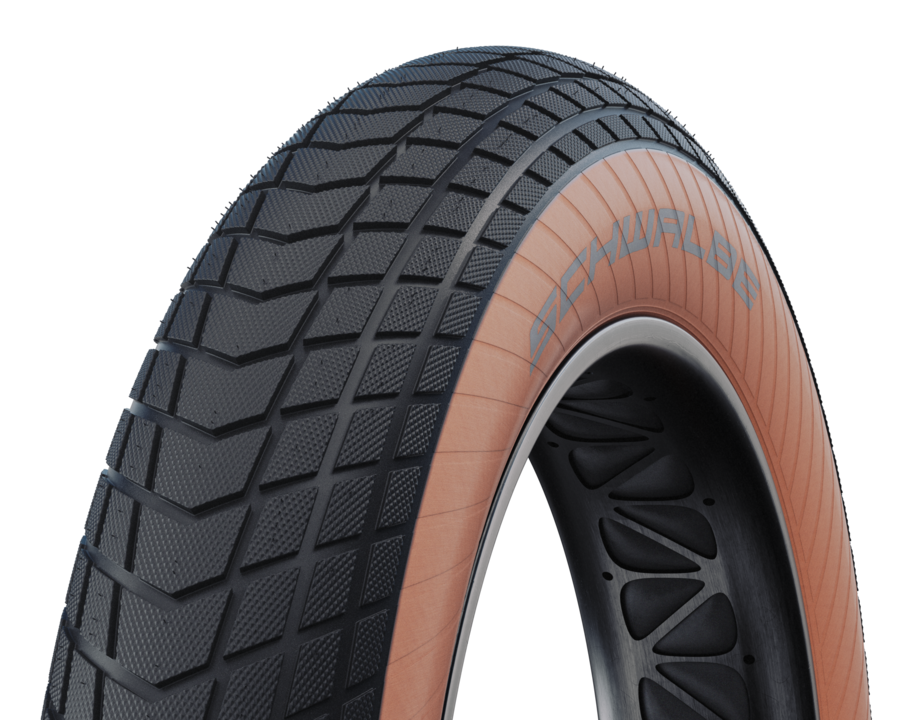
For all-terrain riders who split their time between pavement and off-road, the 45NRTH Dillinger 5 is a legendary ebike friendly fat tire, designed specifically for snow and mixed terrain but equally capable on pavement. It features an aggressive, studdable tread pattern with large knobs for maximum traction on snow, mud, and gravel, a reinforced 30 TPI casing, and a high load capacity, making it a favorite among US riders in northern states who ride year-round.
The HEB Allscape 20x4.0 E-Bike Fat Tire is another top all-terrain option, especially for budget-conscious riders: this tire is 2x thicker than standard factory ebike tires, features a herringbone all-terrain tread pattern that channels water and debris, and is rated for 3,000 to 5,000 miles of ride time—all at a mid-range price point. It’s puncture-resistant, E-bike rated, and fits most 20-inch fat tire ebikes, making it a popular choice for commuters and casual off-road riders alike.

For off-road enthusiasts who tackle rocky trails and deep mud, the Surly Dirt Wizard Studded Fat Tire is a go-to: this tire has an aggressive, deep tread pattern with large, sturdy knobs that dig into soft terrain, a reinforced casing that resists punctures from sharp rocks, and is studdable for added traction on ice and snow. It’s built for heavy-duty use, with a high load capacity and excellent durability, and is a favorite among US off-road ebike riders for its unbeatable off-road performance.
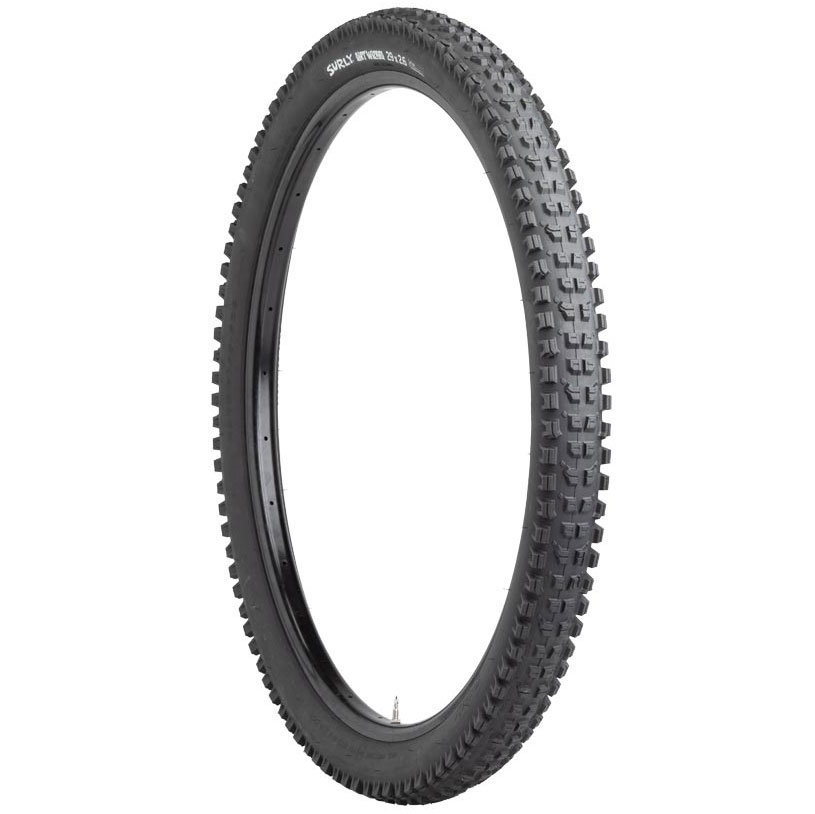
For fat tire ebike riders who prioritize battery range and pavement efficiency, the Schwalbe Big Apple E-Bike Fat Tire is a top pick: this tire features a slick tread pattern with minimal rolling resistance, a reinforced casing, and excellent puncture protection, making it perfect for long commutes and paved tours. It’s low-noise, energy-efficient, and can be run at higher pressures for maximum speed, while still offering enough grip for mild cornering and light gravel. All of these tires are widely available in the US, with positive reviews from riders and professional cyclists alike, and they represent the best in class for their respective terrain and performance categories—whether you’re a city commuter, an off-road enthusiast, or a year-round all-terrain rider, there’s an ebike friendly tire on this list that will meet your needs.
Finally, let’s turn our attention to Hycline’s top ebike friendly fat tires—a brand that has quickly become a fan favorite among US ebike riders for its combination of high performance, durability, and affordability, with a wide range of fat tires engineered specifically for electric bikes and available at hyclinebike.com/collections/fat-tires. Hycline’s fat tires are all marked as E-Bike & Fat Bike Tire, meaning they’re genuine ebike friendly tires with reinforced casings, high load capacities, and tread patterns optimized for ebike torque and performance—no marketing gimmicks here. To help you compare Hycline’s top models and choose the right one for your needs, here’s a detailed table of their key ebike friendly fat tires, including specifications, pricing, and intended uses, directly sourced from their official website: https://hyclinebike.com/collections/fat-tires

| Hycline Model | Size Options | Key Ebike Friendly Features | Price (US Dollars) | Discount Price | Intended Use | Max Load Capacity |
| Hycline Raider | 20×4.0, 26×4.0 | 30 TPI reinforced casing; all-terrain tread; puncture-resistant sidewalls; 5–30 psi compatibility | $54.99 (single) | $49.00 (single); $69.99 (2-pack) | All-terrain, commuting, snow, mild mud | 198 lbs (98 kg) |
| Hycline HyperPave | 20×4.0, 26×4.0 | 30 TPI reinforced casing; semi-slick tread; low rolling resistance; motorcycle-grade rubber | $56.99 (single) | $49.99 (single); $99.99 (2-pack) | Urban commuting, pavement, light gravel | 198 lbs (98 kg) |
| Hycline Rock Conqueror | 20×4.0, 26×4.0 | 30 TPI reinforced casing; aggressive “Big Convex Button” tread; extra-thick sidewalls; non-folding steel bead | $69.99 (single) | $64.99 (single) | Muddy/gravelly off-road, rocky trails | 220 lbs (100 kg) |
| Hycline Auxfore | 20×4.0, 26×4.0 | 30 TPI reinforced casing; balanced tread; low rolling resistance; power-saving design | $59.99 (single) | $52.99 (single) | All-terrain, long-distance commuting | 198 lbs (98 kg) |
| Hycline R4FT | 20×4.0, 26×4.0 | 30 TPI reinforced casing; diamond-knob tread; 40% reduced friction; non-folding steel bead | $79.99 (single) | $74.99 (single) | Extreme all-terrain (snow, sand, rocks, pavement) | 198 lbs (98 kg) |
We’ll now dive deeper into each of these Hycline models, with detailed insights into their intended uses, key features, and why they stand out for American riders, covering urban commuting, all-terrain riding, off-road adventures, snow and sand, and paved efficiency.The first Hycline ebike friendly fat tire to highlight is the Hycline Raider (20×4.0/26×4.0, $49.00)—the brand’s best-selling fat tire, and for good reason: it’s a true all-terrain workhorse that excels on every surface, making it perfect for US riders who want a single tire for commuting, off-road trails, snow, and mild mud. The Raider is designed specifically for electric, snow, and mountain fat bikes, with strong overall performance on complex terrains and a balanced tread pattern that strikes the perfect middle ground between pavement efficiency and off-road traction. As shown in the table above, it features a reinforced 30 TPI casing that handles the torque and weight of ebikes with ease, excellent puncture resistance with thickened sidewalls, and a high load capacity of 198 lbs (98 kg) per tire—enough to support the heavy weight of fat tire ebikes even at low pressures (5 to 30 psi). The Raider’s tread pattern has a smooth central strip for low rolling resistance and low noise on paved roads (critical for battery range), with raised, spaced-out side knobs that deliver unbeatable grip on gravel, dirt trails, and snow, and it channels mud and debris to prevent clogging in wet conditions. It’s available in both 20×4.0 and 26×4.0 sizes—the two most popular fat tire sizes in the US—and is priced at just $49.00 (11% off the original $54.99), making it an incredibly affordable option for riders on a budget. Hycline also offers a Raider Fat Bike Tires Plus Inner Tubes Set ($89.99) and a 2-Pack Raider Fat Bike Tires ($69.99, 19% off), which are even better values for riders who want to replace both tires or need a spare inner tube (Hycline’s inner tubes are durable and designed to match their 4.0-inch fat tires, with thick walls that resist pinch flats). The Raider White-Wall ($54.99, 8% off) is a stylish variant of the classic Raider, with a white sidewall that adds a custom look to your ebike, and it has the same all-terrain performance and ebike friendly features as the original—perfect for riders who want both style and substance. The Hycline Raider stands out for American riders because it’s a true “one tire does it all” option, eliminating the need to switch tires for different terrain, and it offers professional-level performance at a budget price—something that’s hard to find in the ebike friendly fat tire market. It’s ideal for casual riders, commuters, and weekend off-road enthusiasts who want a reliable, versatile tire that can handle everything the US landscape throws at them, from city pavements to mountain trails to snowy backroads.Next is the Hycline HyperPave (20×4.0/26×4.0, $49.99)—Hycline’s premier ebike friendly fat tire for urban commuters and pavement riders who prioritize battery range, low noise, and smooth performance. As outlined in the table, the HyperPave is described as a “more power-friendly ebike and city tour bike fat tire,” with a smooth, semi-slick tread pattern that delivers minimal rolling resistance and ultra-low noise on paved roads and hardpack—exactly what commuters need to extend their ebike’s battery range and enjoy a quiet ride to work. It features a reinforced casing engineered for ebike torque and weight, thickened sidewalls for puncture resistance (critical for city streets littered with glass and nails), and a motorcycle-grade rubber compound that resists wear and tear, even with daily commuting. The HyperPave can be run at higher pressures (20 to 30 psi) for maximum speed and efficiency on pavement, and it still offers enough grip for mild cornering and light gravel, making it a great choice for riders who occasionally venture off the beaten path. Hycline offers the HyperPave in single tire form ($49.99, 11% off) and as a 2-Pack ($99.99, 9% off) or family pack ($85.99, 4% off), giving riders multiple value options, and it’s available in both 20×4.0 and 26×4.0 sizes to fit most fat tire ebikes. What makes the HyperPave stand out for US urban commuters is its unbeatable combination of energy efficiency and durability: it reduces the ebike’s motor strain, boosting battery range by up to 15%, and its puncture resistance means fewer flats on city streets—something that every commuter can appreciate. It’s also low-maintenance, with a tread pattern that doesn’t collect dirt or debris, and it’s priced affordably, making it a top choice for daily commuters who want a tire that’s built for the grind of city riding.For off-road enthusiasts who tackle muddy, gravelly, and rocky terrain, the Hycline Rock Conqueror (20×4.0/26×4.0, $64.99) is Hycline’s heavy-duty ebike friendly fat tire, designed specifically for the most challenging off-road conditions. As seen in the table, the Rock Conqueror is described as a “heavy-duty muscle fat bike tire for muddy and gravelly terrain,” and it lives up to its name with an aggressive, deep tread pattern featuring Hycline’s exclusive “Big Convex Button” design—large, sturdy tread knobs that dig into soft mud and gravel, deliver maximum grip on rocky trails, and channel mud and debris to prevent clogging, which is critical for maintaining traction in wet off-road conditions. It features an extra-thick, reinforced 30 TPI casing that resists punctures from sharp rocks and branches, a high load capacity of 220 lbs (100 kg) per tire that supports the ebike’s weight even at low pressures (5 to 20 psi), and a durable rubber compound that can handle the constant stress of off-road riding. The Rock Conqueror is built for heavy-duty use, with a non-folding steel bead that adds extra durability (perfect for off-road riders who don’t mind a slightly heavier tire for added performance), and it’s available in 20×4.0 and 26×4.0 sizes to fit most fat tire ebikes. What makes the Rock Conqueror stand out for US off-road ebike riders is its unbeatable off-road traction and durability: it can handle the most challenging trails in the US, from the muddy forests of the Pacific Northwest to the rocky mountains of the Rockies, and it resists punctures and wear even with frequent off-road use. It’s a bit more expensive than the Raider at $64.99, but it’s well worth the investment for serious off-road enthusiasts who need a tire that can keep up with their adventurous riding style.For riders who prioritizebattery range and power-saving performance on both pavement and light off-road, the Hycline Auxfore (20×4.0/26×4.0, $52.99) and Hycline Echelon (20×4.0, $52.99) are two exceptional ebike friendly fat tires from Hycline, both designed to deliver stability, power-saving riding, and low rolling resistance—perfect for riders who want to maximize their ebike’s battery range without sacrificing performance. As detailed in the table, the Auxfore is recommended for e-bike and fat-tire rides, with a tread pattern that balances pavement efficiency with light off-road grip, a reinforced casing that handles ebike torque, and a rubber compound that reduces rolling resistance, making it easier for the ebike’s motor to maintain speed and save energy. It’s available in 20×4.0 and 26×4.0 sizes, priced at $52.99 (12% off the original $59.99), and it’s ideal for riders who split their time between city pavements and light gravel trails. The Echelon is a 20×4.0 fat tire specifically designed for ebike rides, with the same power-saving and low rolling resistance features as the Auxfore, and a tread pattern optimized for smooth, stable performance on pavement and hardpack. It’s also priced at $52.99 (12% off), and it’s a great choice for 20-inch fat tire ebike riders who want a compact, efficient tire for commuting and light touring. Both the Auxfore and Echelon feature thickened sidewalls for puncture resistance, a high load capacity of 198 lbs (98 kg) per tire, and Hycline’s signature ebike friendly engineering, and they stand out for US riders because they deliver measurable battery savings—something that every ebike owner can appreciate. They’re affordable, reliable, and built for long-distance riding, making them perfect for riders who love to take their ebike on long tours or extended commutes.Last but certainly not least is the Hycline R4FT (20×4.0/26×4.0, $74.99)—Hycline’s premium heavy-duty ebike friendly fat tire, designed for riders who need a tire that can handle extreme all-terrain conditions, including sandy beaches, snowy trails, rocky gravel, and city streets. As shown in the table, the R4FT is a non-folding, heavy-duty fat tire with a premium rubber compound, a deep diamond-knob tread pattern that reduces friction by approximately 40% on pavement and hardpack, and a reinforced load capability and puncture resistance that make it one of the most durable tires in Hycline’s lineup. It features a 30 TPI casing, a maximum inflate pressure of 30 psi (allowing for both high-pressure pavement riding and low-pressure off-road riding), and a maximum load rating of 198 lbs (98 kg) per tire—enough to support the heaviest fat tire ebikes and additional cargo. The R4FT’s diamond-knob tread pattern delivers unbeatable floatation on sand and snow (critical for US riders who live near the coast or in snowy northern states) and excellent grip on rocky trails and gravel, while its reduced friction on pavement means it doesn’t sacrifice battery range for off-road performance. It’s a non-folding steel bead tire, which makes it heavier but more durable, and it’s priced at $74.99—Hycline’s most expensive fat tire, but well worth the investment for riders who need a tire that can handle the most extreme all-terrain conditions. The R4FT has been extensively tested by Hycline and US riders across all surfaces, from the sandy beaches of Florida to the snowy trails of Alaska, and it has received rave reviews for its unbeatable versatility and durability. It’s the perfect tire for adventurers who want to take their fat tire ebike anywhere and everywhere, and it’s a testament to Hycline’s commitment to building genuine ebike friendly fat tires that can handle the toughest riding conditions in the US.


